
Maybe the roof is near the end of its life. Maybe the HVAC is original, there's a soft spot in the bathroom floor, or the whole house simply needs updating. If you're thinking about selling a house that needs repairs in Atlanta, the big question is usually the same: fix it first, or sell it the way it is?
There isn't one right answer. It depends on what the repairs are, what they'd cost, how long you can carry the house, and what buyers in your area expect. Here's how to think it through, with current numbers.
Repairs cost a lot more than they used to
If you last priced out a project a few years ago, expect sticker shock. The government's producer price index for the goods that go into building homes (lumber, concrete, roofing, wiring, plumbing fixtures and the like) was 59% higher in September 2026 than in January 2019, according to the U.S. Bureau of Labor Statistics. Overall consumer prices rose 33% over the same stretch.
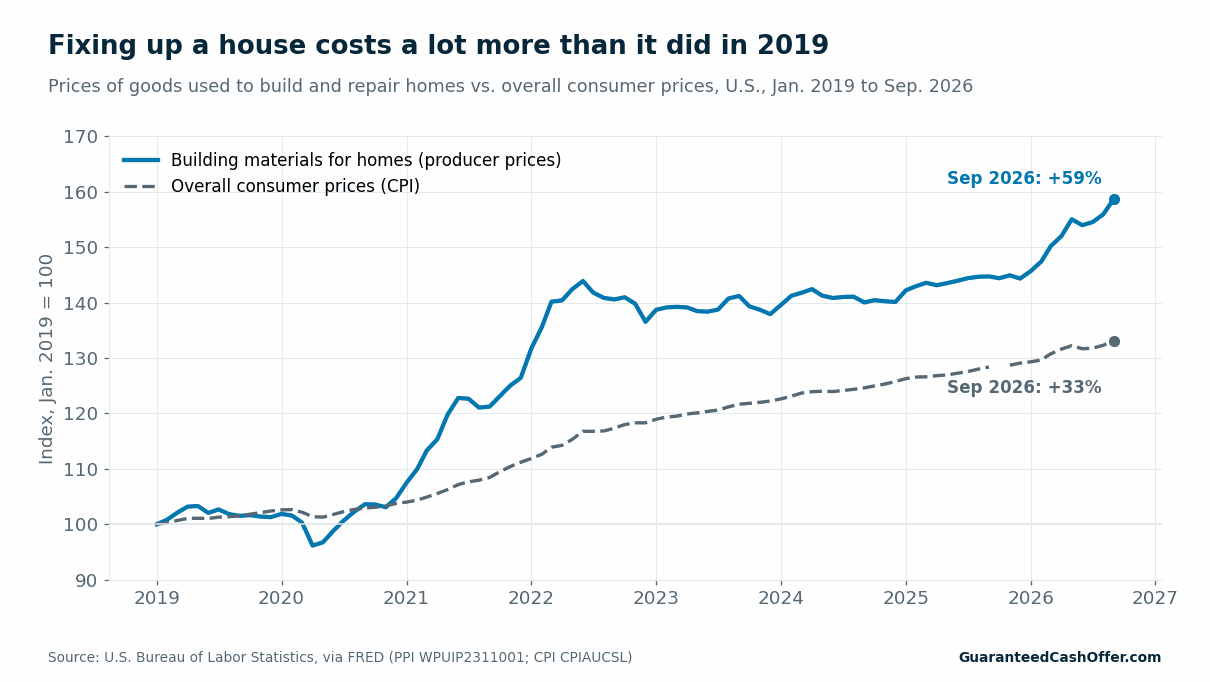
Those prices are also climbing again: the index was up 9.7% from September 2025, versus 3.7% for overall consumer prices. This measures what builders and contractors pay for materials, not labor, so your actual quote will depend on the job and the contractor. But it's a fair warning that a repair budget from 2020 probably won't cover the same work today.
What buyers are dealing with in Atlanta right now
Buyers have more choices than they did a few years ago, and that changes how they treat a house that needs work:
- More homes to choose from. Metro Atlanta had 29,735 active listings in September 2026, according to Realtor.com data.
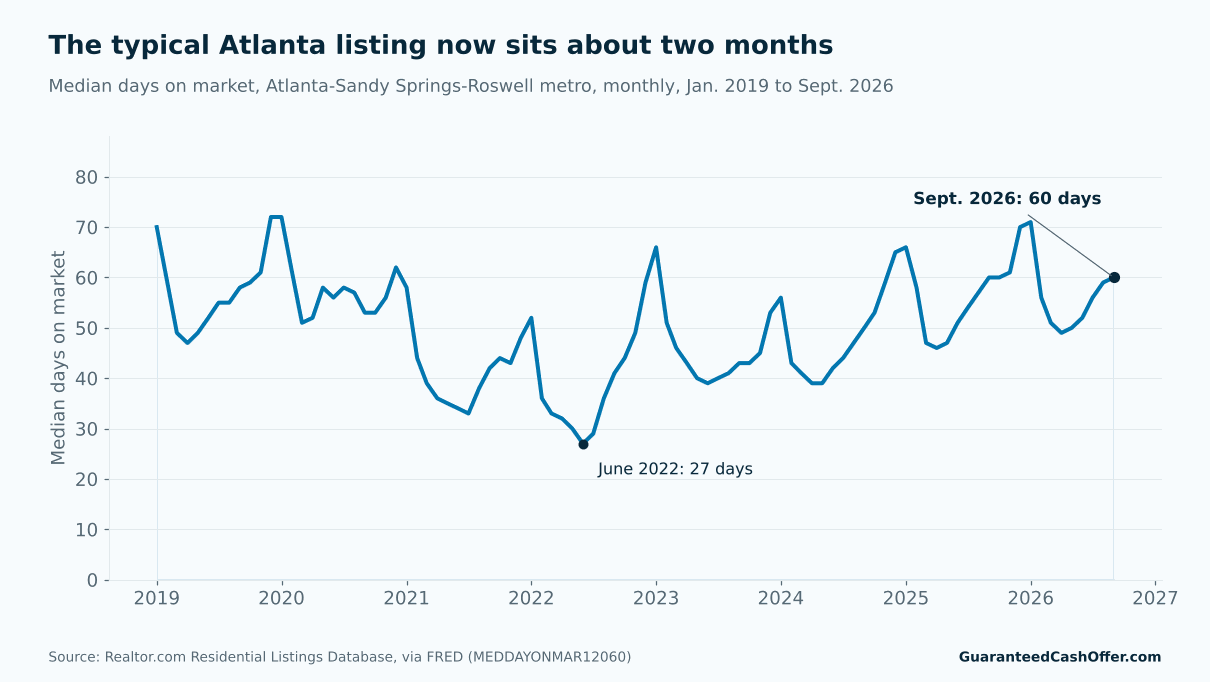
- Homes take longer to sell. The typical listing spent 60 days on the market in September 2026. That's back to a pre-pandemic pace (58 days in September 2019) and far slower than the 27 days of June 2022.
- Buyers are negotiating. 23.7% of Atlanta listings had a price cut in September (Realtor.com), and 72.8% of Atlanta home sales in August included a seller concession, the highest share of the metros Redfin tracked. We cover that in more detail in price cuts and seller concessions in Atlanta.
- Payments are high. The 30-year fixed mortgage rate averaged 7.24% the week of October 29, according to Freddie Mac. A buyer stretching to afford the monthly payment often has little cash left for a new roof after closing.
When buyers can choose, move-in-ready homes tend to get the attention, and homes with obvious problems tend to sit or draw lower offers and repair requests after inspection.
Some repairs can affect the buyer's loan
Condition doesn't only affect what buyers are willing to pay. It can affect whether their lender will make the loan. FHA loans, for example, require a home to meet HUD's minimum property requirements, so an appraiser can flag safety or structural problems that have to be fixed before closing. If your house has issues like a failing roof, exposed wiring or water damage, some financed buyers may not be able to buy it as-is.
There are loans built for fixer-uppers. HUD's 203(k) program "insures mortgages covering the purchase or refinancing and rehabilitation of a home," with part of the loan paying the seller and the rest held in escrow and released as the work is done. These loans can take more paperwork and time, so they aren't the right fit for every buyer or every seller's timeline.
Georgia disclosure basics: "as-is" doesn't mean "don't mention it"
This isn't legal advice. Disclosure questions depend on the facts, so talk with a Georgia real estate attorney about your situation.
Georgia generally follows caveat emptor, or "let the buyer beware," for the sale of an existing home. The Supreme Court of Georgia has called it "the general rule with regard to the purchase of realty." But the court has also been clear about the limit: where a seller "knows the house has serious defects and fails to disclose the defects to the buyer who is unaware of the defects and could not have discovered them in the exercise of due diligence, the suppression of the facts constitutes fraud to which caveat emptor is not a viable defense."
In plain English: you can sell a house as-is, and buyers are expected to inspect. But if you know about a serious hidden problem, like a foundation crack behind fresh drywall or a roof leak that only shows in heavy rain, the safest path is to disclose it in writing. Most listing agents in Georgia will ask you to fill out a seller's disclosure statement, and an honest one protects you as much as the buyer.
Three ways to sell a house that needs work
1. Make repairs, then list
This can bring the highest price, especially when the fixes are the kind buyers and lenders care about most: roof, HVAC, water heater, electrical, plumbing leaks and anything safety-related. The trade-offs are upfront cash, contractor scheduling and time. Every month the house sits, you keep paying the mortgage, taxes, insurance and utilities.
2. List as-is with an agent
You skip the repairs and price the house for its condition. This still reaches the full market, including buyers who want a project. Many sellers get a pre-listing inspection or a couple of contractor bids first, so the price reflects real numbers and there are fewer surprises after the buyer's inspection. Expect showings, a negotiation and possibly a longer time on the market.
3. Sell as-is to a cash buyer
A cash buyer buys the house in its current condition, usually with no repairs, no showings and no lender appraisal to worry about. You'll typically get less than a fixed-up house would sell for, because the buyer is taking on the repair costs and the risk. It can make sense when repairs are large, money or time is tight, or the house is vacant and costing you every month. See what a cash offer looks like, line by line.
How to decide
- Get real numbers. Two or three written bids for the big items beat guesses.
- Ask what comes back. A repair is worth doing if it's likely to add more to the price (or remove more buyer objections) than it costs. A licensed agent can tell you which fixes buyers in your area actually pay for.
- Count the carrying costs. Add up a month of mortgage, taxes, insurance and utilities, then multiply by the months for repairs plus today's time on market.
- Compare your net, not the price. Our home sale calculator and our guide to comparing a cash offer with listing can help you see what you'd actually walk away with.
How Guaranteed Cash Offer helps
With one request, we connect you with vetted local cash buyers and a licensed real estate agent's estimate of what the house could sell for if you list it, repairs and all. You see both side by side and decide what's right for you, on your timeline. There's no fee and no obligation. You can compare your options, read how our process works, or request your offers here.
Frequently asked questions
Can I sell my house in Atlanta without making repairs?
Yes. You can list it as-is with an agent and price it for its condition, or sell it as-is to a cash buyer. Some buyers using FHA or other loans may need certain safety or structural problems fixed before their lender will close, so as-is homes often attract cash buyers and investors.
Do I have to disclose problems when selling a house as-is in Georgia?
Georgia generally follows "buyer beware," but the Supreme Court of Georgia has held that hiding serious defects a seller knows about, which the buyer couldn't discover with due diligence, can be fraud. Disclosing known problems in writing is the safer path. This isn't legal advice; a Georgia real estate attorney can advise on your situation.
Which repairs are worth doing before selling?
Usually the ones that affect safety, financing or a buyer's inspection: roof, HVAC, electrical, plumbing leaks and water damage. Cosmetic updates pay off less reliably. Get written bids and ask a local agent which fixes buyers in your area actually pay for.
Why do repairs cost so much more now?
Material prices have risen faster than overall inflation. The Bureau of Labor Statistics' producer price index for goods used in residential construction was 59% higher in September 2026 than in January 2019, and 9.7% higher than a year earlier.
Will a cash buyer pay less for a house that needs work?
Usually, yes, because the buyer takes on the repair costs, time and risk. The gap varies with the house and the market, which is why it helps to see a cash offer next to an agent's estimate for listing it.
Sources: U.S. Bureau of Labor Statistics, Producer Price Index by Commodity: Net Inputs to Residential Construction, Goods (WPUIP2311001) and Consumer Price Index for All Urban Consumers (CPIAUCSL), via FRED, data through September 2026; Realtor.com Residential Listings Database, via FRED (ACTLISCOU12060, MEDDAYONMAR12060); Realtor.com September 2026 Monthly Housing Report; Redfin, seller concessions report (September 2026); Freddie Mac Primary Mortgage Market Survey, via FRED (MORTGAGE30US); HUD, 203(k) Rehabilitation Mortgage Insurance Program; Cendant Mobility Financial Corp. v. Asuamah, Supreme Court of Georgia (2009); Wilhite v. Mays, Supreme Court of Georgia (1977). Hero photo by Roger Starnes Sr on Unsplash.