

A few years ago, Atlanta sellers were picking from multiple offers, often over asking with the inspection waived. Today the conversation is about price cuts, closing-cost credits and rate buydowns. If you're about to sell, it helps to know what buyers are asking for and how much it can cost you.
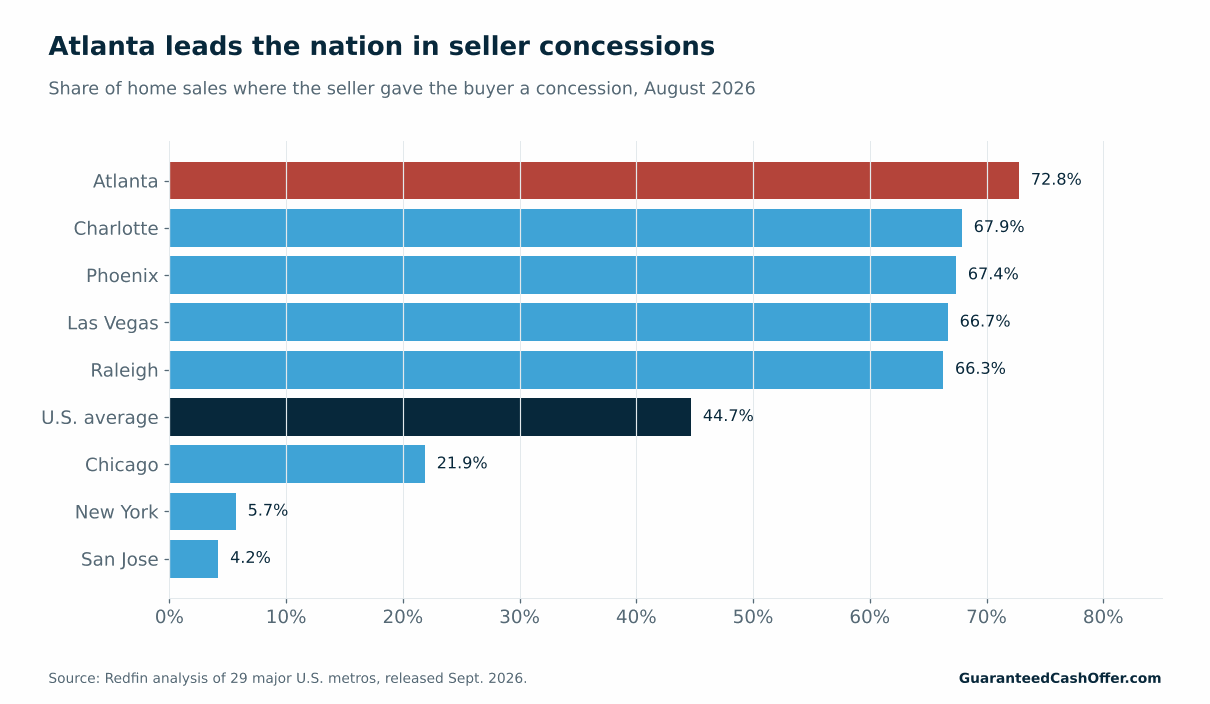
Atlanta leads the country in seller concessions
A seller concession is money or value the seller gives the buyer to help the deal close. Most often it's help with closing costs, but it can also be a repair credit or money to buy down the buyer's mortgage rate.
Concessions have gone from rare to routine. In August 2026, Redfin found that sellers gave concessions in 44.7% of U.S. home sales, the highest August share since at least 2020. In Atlanta the figure was 72.8%, the highest of the 29 major metros Redfin analyzed. In other words, almost three out of four Atlanta sales included some kind of concession.
Price cuts are common, too
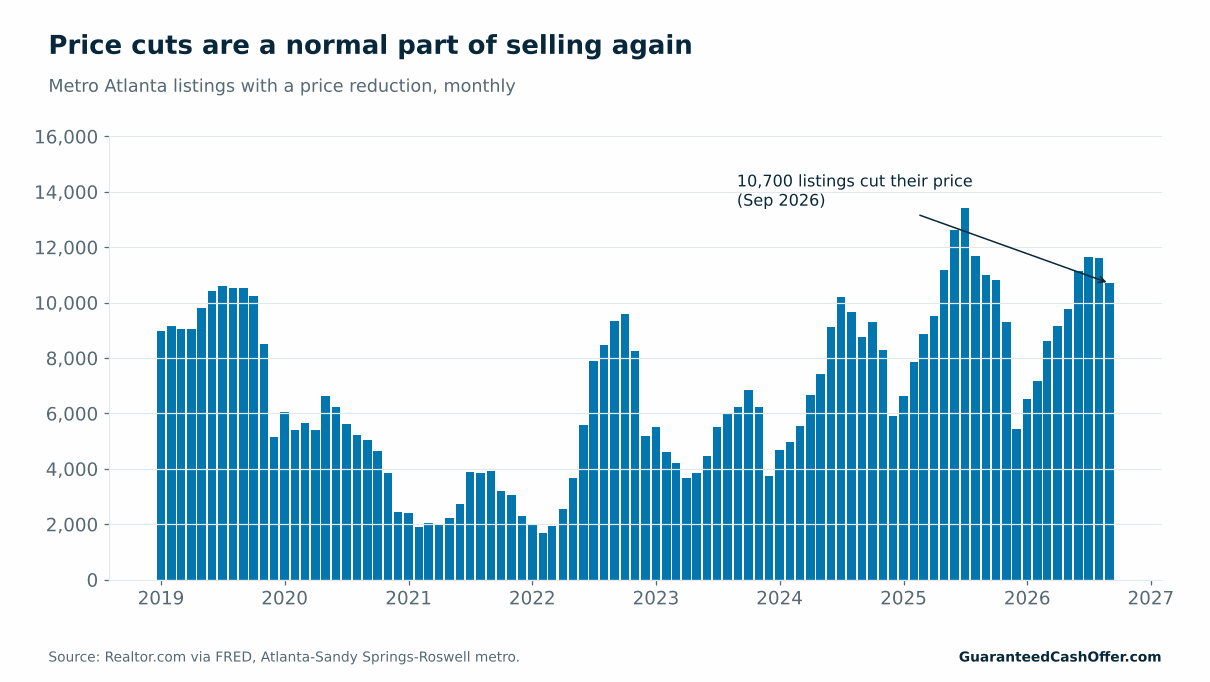
Concessions aren't the only way sellers are giving ground. In September 2026, 10,700 metro Atlanta listings had a price reduction, according to Realtor.com data. Realtor.com put the share of Atlanta listings with a price cut at 23.7%, above the national rate of 20.8%. Nationally, Redfin found that 15.8% of August sales included both a price cut and a concession.
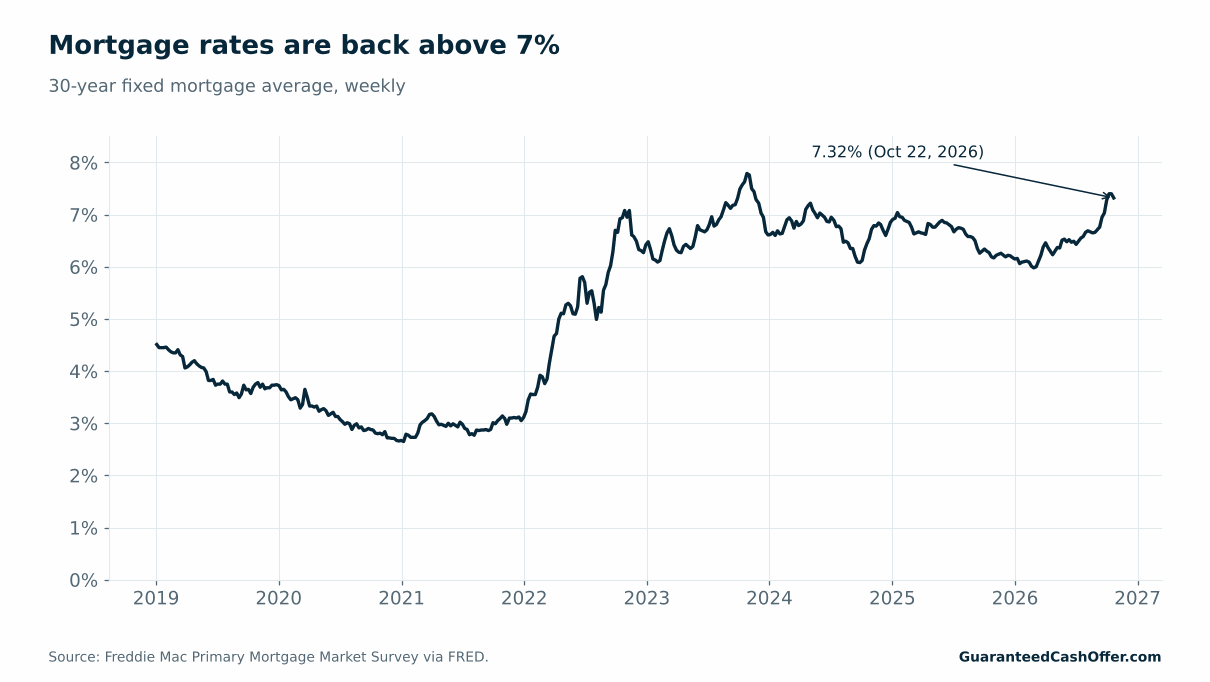
Why now? The biggest reason is affordability. The average 30-year mortgage rate climbed back above 7% this fall and hit 7.32% the week of October 22, according to Freddie Mac. At the same time, metro Atlanta has more homes for sale than any September since 2019. When payments are high and buyers have choices, they push for a better deal.
The most common concessions buyers ask for
- Closing-cost help. The seller pays part of the buyer's closing costs. This is the most common request, especially from first-time buyers who are short on cash.
- Rate buydowns. The seller pays the lender to lower the buyer's interest rate for the first year or two, or for the life of the loan. At today's rates, this can lower a buyer's monthly payment more than a small price cut would.
- Repair credits. Instead of fixing what the inspector found, the seller gives the buyer a credit at closing.
- Home warranty. A smaller ask. The seller pays for a one-year home warranty.
Lenders and loan programs limit how much a seller can contribute, usually as a percentage of the price, depending on the loan type and the buyer's down payment. Your agent and the buyer's lender can tell you what's allowed on a given deal.
What concessions and price cuts really cost you
Concessions are easy to underestimate because the sale price looks the same. Here's a simple example with round numbers (for illustration only):
Example: A house sells for $400,000. The seller agrees to a 2% closing-cost credit ($8,000) and a $5,000 repair credit after the inspection. The contract still says $400,000, but the seller's proceeds are $13,000 lower before commissions, closing costs or months of carrying the house are counted.
Price cuts carry a cost of their own. A listing that sits for weeks, then drops its price, can make buyers wonder what's wrong with it. Meanwhile you're still making the payments.
How to protect your bottom line
Price it right the first time
The first two or three weeks on the market are when you get the most attention. Pricing too high and cutting later often ends up below where a realistic price would have landed.
Decide your concession strategy before you list
Know how much you're willing to give and in what form. A rate buydown can do more for the buyer's payment than a price cut of the same dollar amount, and it keeps your sale price (and the comparable sales in your neighborhood) intact. Ask your agent to run both.
Handle the obvious repairs, or price for them
Anything an inspector is sure to flag will come back as a repair request or credit. Either fix it before you list or price the house to reflect it.
Focus on your net, not the price
The number that matters is what you walk away with after commissions, closing costs, concessions, repairs and holding costs. Our free home sale calculator helps you estimate it.
Know your floor
Before you list, find out what your house would bring as-is from a cash buyer. That number becomes your floor. If the listing route starts to involve price cuts, repair credits and closing-cost help, you can see clearly whether it still comes out ahead.

See both numbers before you decide
Guaranteed Cash Offer puts your home in front of vetted local cash buyers. A licensed agent prepares a listing estimate at the same time, so you can compare the cash offers and the listing estimate side by side. There's no fee and no obligation. Request your offers or see how it works.
Frequently asked questions
What is a seller concession?
It's money or value the seller gives the buyer to help close the sale, such as paying part of the buyer's closing costs, buying down their mortgage rate or giving a repair credit.
Are seller concessions common in Atlanta right now?
Yes. Redfin reported that 72.8% of Atlanta home sales in August 2026 included a seller concession, the highest share among the 29 major metros in its analysis.
Is a price cut or a concession better for a seller?
It depends on the buyer and the loan. A rate buydown can help a buyer's monthly payment more than an equal price cut, and it keeps your recorded sale price higher. Have your agent compare both for your situation.
Do cash buyers ask for concessions?
Cash buyers typically buy as-is and don't need a lender, so there's no loan-related closing-cost help or rate buydown involved. Their offer reflects the condition of the house up front.
Sources: Redfin's August 2026 seller-concessions analysis (29 major U.S. metros), Realtor.com's September 2026 Monthly Housing Report, Realtor.com metro data via the Federal Reserve Bank of St. Louis (FRED), and Freddie Mac's Primary Mortgage Market Survey. This article is general information, not legal, tax or financial advice.