

If you've had a house on the market around Atlanta this year, or you're thinking about listing one, you've probably noticed things feel different than they did a few years ago. Showings are slower. Buyers ask for more. Some listings sit for weeks without a serious offer.
That isn't just a feeling. The numbers show a market that has shifted toward buyers. Below we walk through what the data says, then cover the situations where selling to a cash investor can make sense, and the ones where listing is still the better call.
Atlanta's market by the numbers
Here's what the most recent data shows for metro Atlanta:
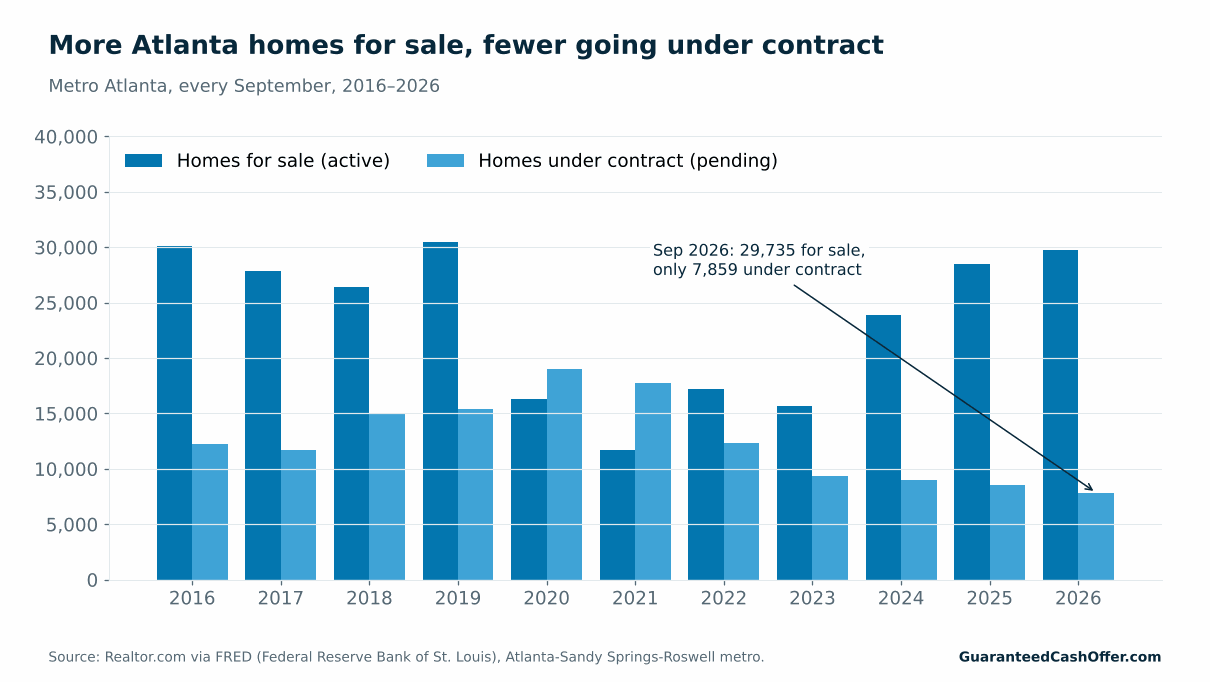
- More homes for sale. Metro Atlanta had 29,735 active listings in September 2026, according to Realtor.com data published by the St. Louis Fed. That's up 4.3% from a year earlier and the most for any September since 2019.
- Fewer homes going under contract. Only 7,859 homes were pending in September. That's down about 8% from last year and the lowest September count in the data, which goes back to 2016. Today there are almost four homes for sale for every one under contract. In September 2021, more homes were under contract than for sale.
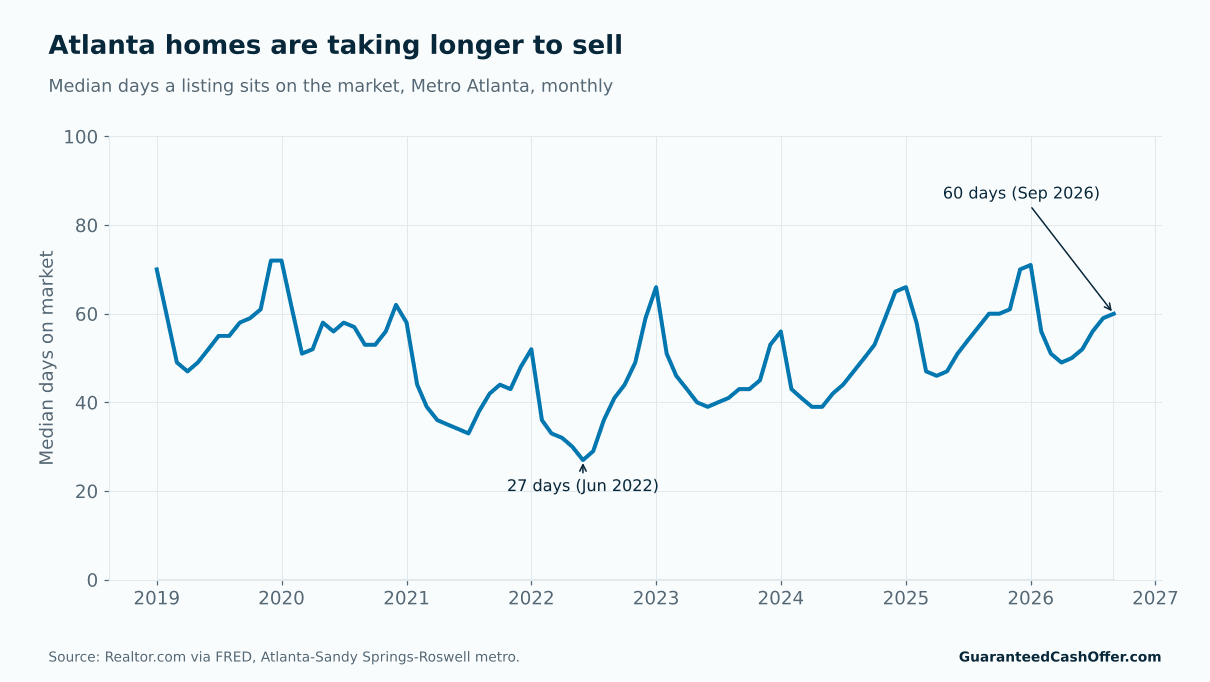
- Homes are taking longer to sell. The typical metro Atlanta listing spent 60 days on the market in September. In June 2022 it was just 27.
- Borrowing got more expensive again. The average 30-year mortgage rate was 7.32% the week of October 22, 2026, according to Freddie Mac. That's up from about 6.1% early this year.
- Buyers are asking for help. Redfin found that sellers gave buyers a concession (such as closing-cost help or a repair credit) in 72.8% of Atlanta home sales in August. That was the highest share of the 29 major metros Redfin tracks.
None of this means homes aren't selling. They are. Redfin's numbers for the city of Atlanta show the median sale price in September was up from a year ago, and homes sold for about 97.4% of their list price on average. But buyers have more choices and more leverage than they've had in years. They use it in the price, the repairs and the timeline.
What a buyer's market means for you as a seller
When buyers have options, a few things tend to happen in a traditional sale:
- Move-in-ready homes get the attention. Most buyers are stretching to afford a payment at 7%-plus rates. Few of them have extra cash for a new roof or HVAC system, so houses that need work sit longer.
- The inspection becomes a second negotiation. After the inspection, buyers often ask for repairs, a credit or a lower price. Sometimes they walk away.
- Financing adds risk. Most buyers need a loan, and the loan needs an appraisal. If either one runs into trouble, the closing can be delayed or fall apart.
- Your costs keep running. Every extra month on the market means another mortgage payment, plus taxes, insurance, utilities and upkeep.
7 good reasons to consider selling to a cash investor
A cash sale isn't right for everyone. But in a market like this one, there are some clear situations where it deserves a serious look.
1. The house needs work you don't want to do
Investors buy houses as-is. You don't have to fix the roof, replace the carpet or deal with the list from a buyer's inspector. In a market where buyers skip homes that need work, that matters more than it did when everything sold in a weekend.
2. You need certainty more than a top-dollar gamble
A cash buyer doesn't need a lender's approval or an appraisal. That removes two of the most common reasons a sale gets delayed or falls through. If you need to know the deal will close, certainty is worth something.
3. Your timing matters
Maybe you're relocating for a job, already bought your next home, or don't want to carry two mortgages. With a median of 60 days on the market before you even get to closing, a cash sale on the date you choose can take a lot of pressure off.
4. You inherited a house
Inherited homes are often older, full of belongings and sitting vacant, and the family may live out of state. Selling as-is to an investor can be simpler than cleaning out, repairing and listing a house from a distance. Probate can affect when and how an inherited house can be sold, so talk with an attorney about your situation. (This isn't legal advice.)
5. It's a rental, and you're done being a landlord
Showing a house with tenants in it is hard, and many retail buyers want it vacant. Investors are used to buying tenant-occupied properties, so you may not need to wait for a lease to end or a unit to turn over.
6. You're behind on payments
If you've fallen behind on your mortgage, time is the one thing you can't get back. Talk to your lender early about your options. If selling is the right move, a sale that closes on your schedule can matter a lot. Our foreclosure options page covers the basics, and a Georgia attorney or HUD-approved housing counselor can help with your specific situation. (This isn't legal advice.)
7. You want it simple and private
No open houses, no strangers walking through on weekends, no keeping the house spotless for months. A cash sale usually means one walkthrough and a closing date you pick.

When listing is probably the better choice
We'll be straight with you: if your house is updated and in good shape, you're not in a hurry, and you can wait out a longer market, listing with a good local agent will often net you more. Cash investors have to account for repairs, holding costs and resale. So their offers usually come in below what a move-in-ready house could bring on the open market.
The right answer depends on your house and your situation. That's why the comparison matters.
How to compare a cash offer to a listing
Don't compare a cash offer to a list price. Compare it to what you would actually walk away with from a listing. To get that number, start with a realistic sale price, then subtract:
- Agent commissions (these are negotiable)
- Your share of closing costs
- Repairs before listing and any repair credits after the inspection
- Concessions to the buyer, which are now common in Atlanta
- Mortgage payments, taxes, insurance and utilities for every month the house is on the market
Then put that number next to the cash offer. Our free home sale calculator can help you run the math, and our side-by-side comparison shows how the two paths usually differ.
How Guaranteed Cash Offer helps
Most "we buy houses" companies give you one offer and hope you take it. We do it differently. One request puts your home in front of vetted local cash buyers, and a licensed agent prepares a listing estimate at the same time. You see the cash offers and the listing estimate side by side, then choose, or walk away. There's no fee and no obligation. See how it works.
Frequently asked questions
Is now a bad time to sell a house in Atlanta?
Not necessarily. Homes are still selling and prices have held up. But there's more competition from other sellers, homes take longer to sell, and buyers are negotiating harder. Pricing it right and understanding your net matter more than they did a few years ago.
Will a cash investor pay less than market value?
Usually, yes, compared to what a move-in-ready home could bring on the open market. The real question is how the cash offer compares to your net after commissions, repairs, concessions and months of holding costs. For homes that need work, the gap is often smaller than people expect.
Do I have to make repairs before selling to an investor?
No. Investors typically buy as-is, so you don't need to fix anything or clean it out first.
How do I know a cash offer is fair?
Get more than one offer and compare them against a realistic listing estimate. Seeing several numbers side by side is the best way to judge fairness.
Market figures are from Realtor.com (via the Federal Reserve Bank of St. Louis FRED database, metro Atlanta, September 2026), Freddie Mac's Primary Mortgage Market Survey (week of October 22, 2026), Redfin's August 2026 seller-concessions analysis, and Redfin's Atlanta city market data for September 2026. Every home and situation is different. This article is general information, not legal, tax or financial advice.