

On October 22, two federal housing announcements landed on the same day. The White House issued an executive order aimed at lowering mortgage and closing costs, and the U.S. Treasury proposed rules for a new law that will limit large corporate investors from buying single-family homes starting January 7, 2027.
If you're thinking about selling, you may be wondering whether any of this changes who will buy your house, or what they'll pay. The short answer: not much right away, and probably less than the headlines suggest. Here's what was actually announced, what it means for sellers, and what's still undecided.
What the October 22 executive order does
The order, titled "Decreasing Housing Costs for the American People," mostly directs federal housing agencies to study or start programs. It doesn't change anything about how a home sale works today. Its main pieces:
- Mortgage insurance that ends sooner. The Federal Housing Finance Agency (FHFA) may direct Fannie Mae and Freddie Mac to run a pilot that cancels a borrower's mortgage insurance once their equity is high enough, based on the home's current market value. The pilot would apply only to mortgages made after it starts.
- Cheaper refinances. FHFA may turn a pilot that lets Fannie Mae and Freddie Mac accept an automated title review instead of lender's title insurance on certain refinances into a permanent, nationwide program.
- Factory-built homes. A new Task Force on Manufactured Housing Innovation, led by HUD and FHFA, has 180 days to recommend ways to make factory-built homes easier to permit and finance.
- Lower rates on some government loans. The U.S. Department of Agriculture and the Department of Veterans Affairs are told to reduce interest rates on single-family loans they make directly, within existing law and funding.
Most of this helps people who already own homes or are buying with certain loans, and much of it depends on agency decisions still to come. The order doesn't mention home sellers or investors at all.
The bigger change for sellers: limits on large investors
The rule that matters more for sellers comes from Congress, not the executive order. The 21st Century ROAD to Housing Act became law on July 11, 2026. Section 1001 says that, beginning January 7, 2027, a "large institutional investor" generally may not buy, or sign a contract to buy, a single-family home unless the purchase fits one of the law's exceptions.
Under the law, a large institutional investor is a company in the business of owning, renting or managing single-family homes that controls 350 or more of them, directly or through related companies. On October 22, Treasury proposed rules explaining how it plans to apply the law. The public can comment for 30 days after the proposal is published in the Federal Register, so the details may still change.
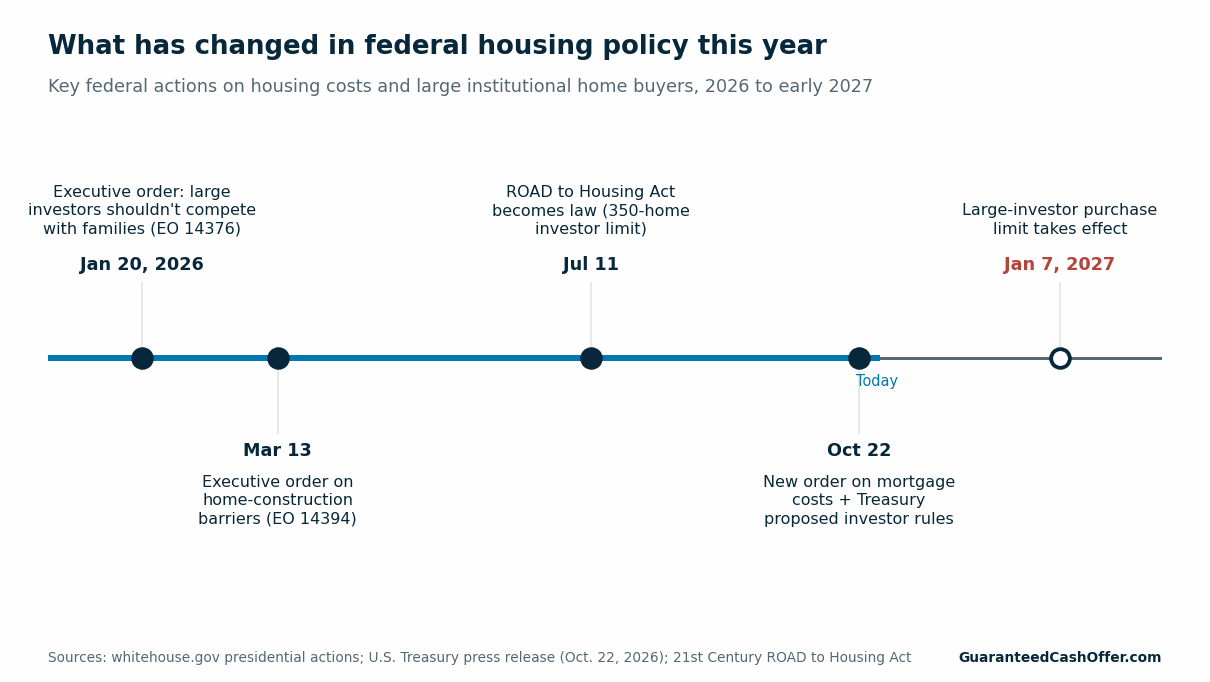
A few points are worth knowing:
- There are exceptions. The law allows large investors to keep buying in certain cases, including newly built rental communities, homes they substantially renovate and rent out, homes they renovate and resell to buyers, and programs that help renters become owners.
- No forced sales. According to an analysis by the law firm Latham & Watkins, the law doesn't require large investors to sell the homes they already own.
- Penalties are steep. Violations can bring civil penalties of up to $1 million or three times the purchase price, whichever is greater, which means covered companies are likely to be careful.
What this means if you're selling
For most sellers, the buyer pool won't change much. The 350-home threshold is high. It's aimed at the largest national landlords, not at families, first-time buyers, people buying a second home, or the local investors who buy a few houses a year.
Cash buyers will still be part of the market, too. In September 2026, 27% of U.S. existing-home sales were all-cash, according to the National Association of REALTORS®, and that share has stayed between 25% and 31% for more than a year. Investors and second-home buyers together made up 20% of September sales.
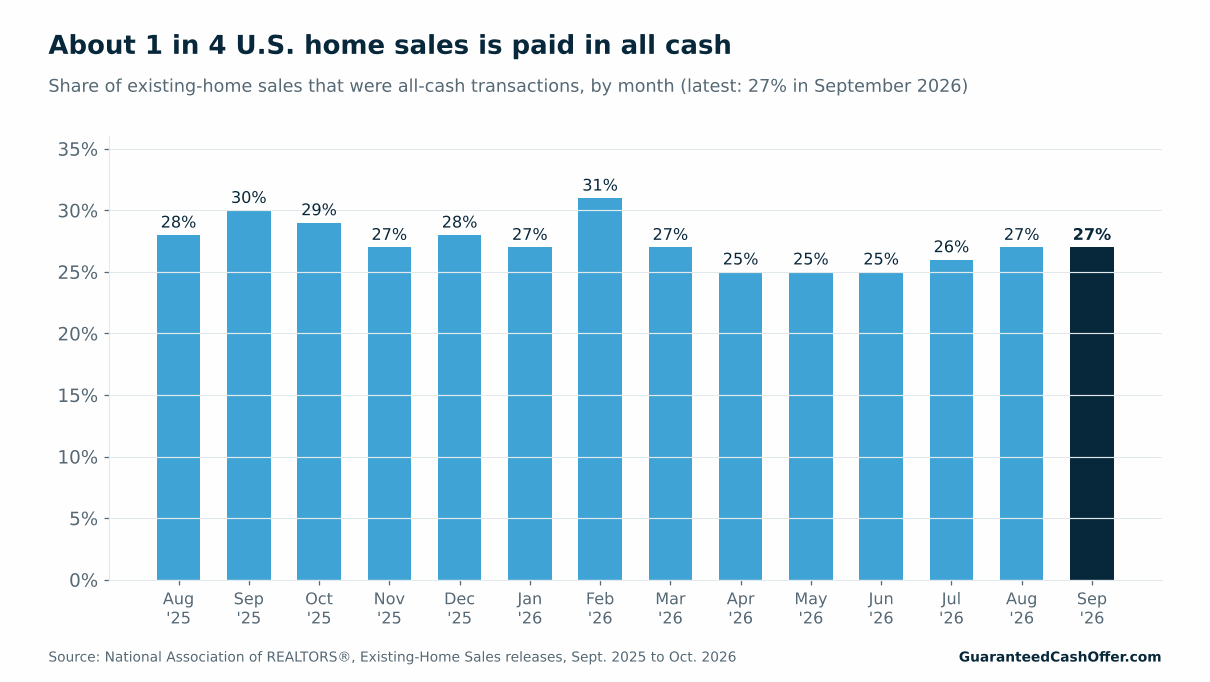
A few practical steps:
- Don't rush because of a headline. Nothing in the executive order changes your sale today, and the investor limit doesn't start until January 7, 2027.
- Know who you're dealing with. If you get an offer from a large national company and closing could land near or after January 7, ask how the new law applies to them. Because the limit covers signing a contract as well as buying, timing can matter.
- Homes that need work still have buyers. The law's renovation exceptions mean even large companies may keep buying homes that need significant repairs. Local investors and individual buyers aren't covered by the limit.
- Compare your real net. Whoever the buyer is, what matters is what you walk away with after costs and time. Our home sale calculator can help you estimate it.
Mortgage rates still matter more to most sellers than any of these policies. Freddie Mac's average 30-year fixed rate was 7.24% for the week of October 29. That's down from 7.40% earlier in October, but still well above the 6.66% of late August.
This isn't legal advice. If a sale depends on how the new law applies to a specific buyer, talk with a Georgia real estate attorney.
How Guaranteed Cash Offer helps
With one request, we connect you with vetted local cash buyers and a licensed real estate agent's estimate of what your home could sell for if you list it. You see both side by side and decide what's right for you. There's no fee and no obligation. Want to know what happens after you reach out? Here's our process, or request your offers here.
Frequently asked questions
Does the new executive order ban corporations from buying houses?
No. The October 22, 2026 order focuses on mortgage insurance, title costs for refinances, manufactured housing and rates on some government loans. The limit on large investors comes from the ROAD to Housing Act, a law passed by Congress, which takes effect January 7, 2027.
Who counts as a "large institutional investor"?
Under the law, it's a company in the business of owning, renting or managing single-family homes that controls 350 or more of them, directly or with related companies. Treasury's proposed rules add more detail and are open for public comment.
Can I still sell my house to a cash investor?
Yes. Individuals and smaller investors aren't covered by the limit, and even large investors can still buy under certain exceptions, such as homes they substantially renovate.
Will these changes lower home prices?
No one can say for sure. The investor limit applies to a narrow group of very large buyers, and the executive order mostly targets ongoing ownership and refinance costs. Mortgage rates and local supply are likely to matter more for prices.
Should I sell before January 7, 2027?
Only if it fits your plans. For most sellers, the date won't change who can buy their home. If you're negotiating with a large national buyer, ask how the rule affects their timing.
Sources: The White House, "Decreasing Housing Costs for the American People" (Oct. 22, 2026) and fact sheet; U.S. Department of the Treasury, proposed rules implementing the ROAD to Housing Act (Oct. 22, 2026); Executive Order 14376, "Stopping Wall Street from Competing with Main Street Homebuyers" (Jan. 20, 2026); Latham & Watkins, "21st Century ROAD to Housing Act Becomes Law" (July 2026); National Association of REALTORS®, monthly Existing-Home Sales releases (for example, "Existing-Home Sales Increased 1.5% in September", Oct. 13, 2026); Freddie Mac Primary Mortgage Market Survey, via FRED (MORTGAGE30US). Hero photo by Will Haddock on Unsplash.